
Home / About
About Restore
Why surgical instrument reprocessing needed a system — and what Restore built for it.
The challenge
20 million procedures, one reusable container
There are approximately 6,000 hospitals and 5,000 surgery centers in the United States, performing more than 20 million surgical procedures each year, which require surgical instruments to be arranged and packaged in a container that is sterilized and reused.
Historically, the challenges center on the logistical aspects of performing surgery: the decontamination, inspection and re-assembly of reusable surgical devices. Inefficient reprocessing causes surgical delays, case cancellations, surgical site infections, instrument breakage and staffing challenges — and patients not being seen, with hundreds of millions of dollars in lost revenue each year.
With the passing of the Affordable Care Act in 2010, health systems are increasingly focused on cost-cutting. Reducing inefficiency and waste in health care systems enables hospitals to administer more effective care to the people who need it most.
The solution
Fewer touch points in the continuum
Restore developed the patent-pending Restore Modular Sterilization Tray System and method, designed to lessen the touch points within the surgical sterilization continuum.
By decreasing reprocessing time — and the surgical delays associated with contamination and assembly errors — hospitals can maximise throughput. Depending on the facility, that translates into more patients seen and millions in new revenue.
Restore states the benefits plainly: decreased loss of instrumentation, decreased assembly time, increased compliance, optimisation of surgical volume, tray weights under the recommended 25 pounds, fewer sharps accidents, more focus on inspecting complex instruments, and a smaller repair budget.
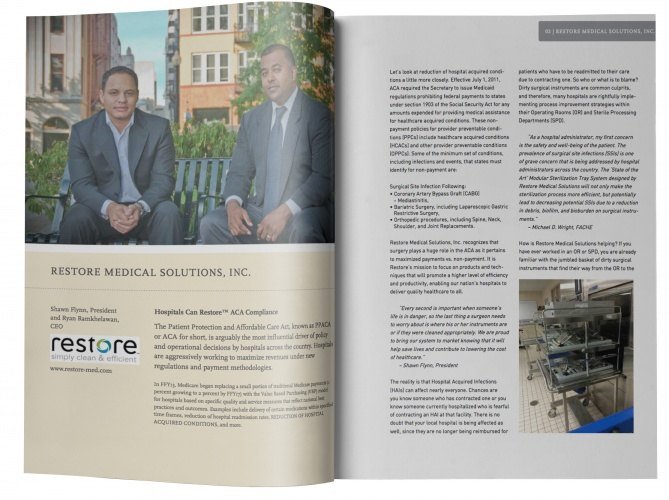
Eight benefits, as listed
- Decreased loss of surgical instrumentation
- Decreased assembly time
- Increased compliance with recommended standards and best practices
- Optimisation of surgical volume by minimising delays associated with reprocessing
- Compliance of tray weight (less than 25 pounds) through set optimisation
- Reduction in sharps-associated accidents
- Increased focus on inspection and functionality of complex, high-dollar instruments
- Reduced capital budget for repairs associated with poor care and handling
From Atlanta to Memphis
Restore Medical Solutions was formed in Atlanta, Georgia, and moved to Memphis in 2012 to join the inaugural class of the Bioworks ZeroTo510 accelerator. It has filed patents, obtained ISO 13485 certification with CMDCAS, verified its claims through independent laboratory testing, and been cleared by the FDA.